
If your roll-to-roll equipment is creating defects, limiting throughput, or relying on outdated controls, the default assumption is often that replacement is the only path forward, but that assumption can be costly.
At Re:Build Optimation, we regularly work with manufacturers operating legacy roll-to-roll systems that no longer meet current production demands. The common challenge is not that the equipment has failed. It is that it has fallen behind. Performance expectations have increased, materials have evolved, and production requirements have become more demanding. In many cases, the core system is still structurally sound, but critical components such as controls, web handling, and process configuration are no longer optimized. This creates a gap between what the system was designed to do and what it is now expected to deliver.
This blog explores why roll-to-roll equipment upgrades can often deliver better results than full replacement, and how manufacturers can modernize their systems while reducing cost, risk, and disruption.
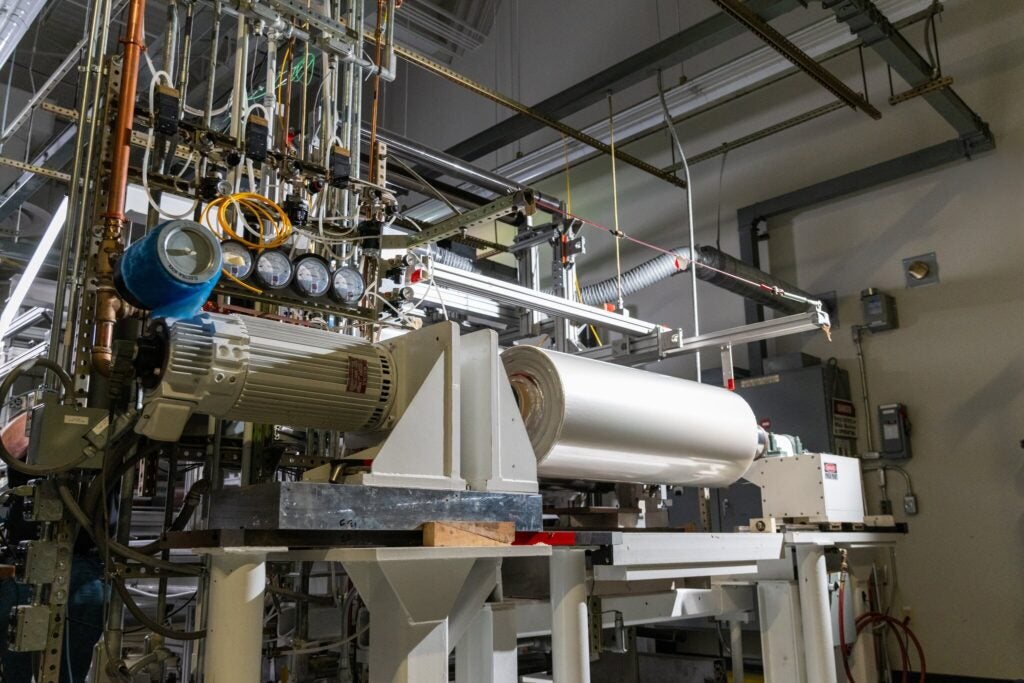
Many roll-to-roll processing systems in operation today were designed for a different manufacturing environment. Materials may have been thicker or less sensitive, production speeds lower, and quality requirements less stringent. As those conditions evolve, the equipment often struggles to keep pace.
This misalignment typically shows up in subtle ways at first, but over time it becomes more pronounced and more costly. Increased scrap rates, inconsistent product quality, and frequent troubleshooting begin to impact both production efficiency and profitability.
More specifically, manufacturers often experience:
These issues are rarely isolated. They are interconnected, often rooted in system-level limitations rather than individual component failures. Without addressing the underlying causes, incremental fixes tend to provide only temporary relief.
Replacing a roll-to-roll production line is a significant decision that extends beyond equipment cost. It introduces operational disruption, extended downtime, and the need to retrain personnel and revalidate processes. For many manufacturers, these secondary impacts can be just as costly as the capital investment itself. At the same time, full replacement may not be necessary.
Many legacy R2R systems were built with durable mechanical frameworks that remain viable for years or even decades. The limitations are often tied to outdated subsystems rather than the entire machine.
This is where roll-to-roll equipment retrofits and upgrades offer a compelling alternative. By focusing on the areas that directly impact performance, manufacturers can achieve meaningful improvements without the risks associated with full replacement.
The key is to evaluate the system holistically and determine where targeted investments will produce the greatest return.
Modernizing roll-to-roll machinery requires a strategic approach. Not all upgrades deliver equal value, and the most effective improvements are those that address root causes rather than symptoms.
1. Controls Modernization for R2R Systems
Outdated control systems are one of the most common constraints in roll-to-roll manufacturing lines. Legacy PLCs, limited data visibility, and rigid programming structures make it difficult to optimize performance or adapt to new requirements.
Upgrading to modern automation platforms enables real-time monitoring, improved process control, and greater flexibility. Operators gain better insight into system behavior, while engineers can implement more advanced control strategies to stabilize production.
Over time, this leads to improved reliability, reduced downtime, and a stronger foundation for future upgrades.
2. Web Handling Optimization to Reduce Defects
Many of the most persistent issues in roll-to-roll processing originate from poor web handling conditions. Even small inconsistencies in alignment or tension can propagate through the system, resulting in wrinkles, tracking issues, or defects in the final product.
Optimizing web handling involves more than adjusting setpoints. It requires a detailed understanding of how the material behaves under different conditions and how the system responds to those behaviors.
Improvements in tension control, roller alignment, and web path design can significantly reduce variability. In many cases, these changes lead to immediate improvements in yield and product consistency.
3. Mechanical Upgrades and System Enhancements
In addition to controls and web handling, targeted mechanical upgrades can further enhance system performance. These improvements are often highly specific to the application and may involve reconfiguring certain sections of the machine or adding new capabilities.
Examples include upgrading rollers, improving structural alignment, or integrating new process modules. While these changes may seem incremental, they can have a significant impact when applied to the right areas.
The goal is not to rebuild the system, but to enhance it in ways that align with current production requirements.
In one recent project, a legacy coating system needed to be upgraded to meet new performance requirements. A full replacement was initially considered, but further evaluation revealed that the core system could be effectively modernized.
The solution involved a roll-to-roll retrofit that included modern control system upgrades and improvements to web handling performance. These changes enhanced both functionality and usability, allowing the system to operate more efficiently and consistently.
The result was a cost-effective solution that extended the life of the equipment while improving output and reliability, all without the disruption of a full system replacement. This type of approach demonstrates how targeted upgrades can deliver measurable results while preserving existing assets.
One of the most common realities in roll-to-roll manufacturing is that equipment continues to operate, but no longer performs at the level required for modern production. This is not necessarily a failure of the system. It is often a reflection of changing conditions.
Materials evolve. Product specifications become more demanding. Production volumes increase. Over time, these changes create new challenges that the original system was not designed to address.
However, the underlying system often retains significant value. With the right engineering approach, it can be adapted to meet these new requirements. Unlocking this potential requires a shift in perspective. Instead of asking whether the system should be replaced, manufacturers should ask how it can be improved.
Before making a decision on replacement, it is critical to conduct a structured evaluation of your roll-to-roll (R2R) system. This process goes beyond identifying obvious issues and instead focuses on developing a comprehensive understanding of how the system performs under real operating conditions. By analyzing both performance limitations and opportunities for improvement, manufacturers can distinguish between isolated problems and systemic constraints. This level of insight enables more informed decision-making, helping teams prioritize high-impact upgrades, reduce unnecessary capital spending, and build a clear path toward improved performance and long-term reliability.
Key questions to consider include:
Answering these questions provides a clearer understanding of what is possible and helps guide more informed, data-driven decisions.
When implemented strategically, roll-to-roll equipment upgrades can deliver meaningful operational and financial benefits that extend well beyond immediate performance improvements. Rather than serving as short-term fixes, these upgrades address underlying system limitations, enabling more stable, efficient, and scalable production. By focusing on the areas that have the greatest impact on process control, material handling, and system reliability, manufacturers can unlock improvements that compound over time, strengthening both day-to-day operations and long-term competitiveness.
These include:
These benefits compound over time, making upgrades a highly effective way to improve both short-term performance and long-term scalability.
Replacing your roll-to-roll equipment may seem like the most direct solution when performance declines. However, in many cases, it is not the most efficient or strategic option. Roll-to-roll system upgrades and retrofits allow manufacturers to address specific challenges, improve performance, and extend the life of existing assets without unnecessary disruption.
At Re:Build Optimation, we work with manufacturers to evaluate their systems, identify performance gaps, and implement targeted improvements that deliver measurable results. If your system is underperforming, the next step may not be replacement. It may be unlocking the full potential of what you already have.
If you are evaluating whether to upgrade or replace your system, our team can help you assess your current setup and identify practical next steps. Schedule a roll-to-roll system review today.
Looking to connect with an experienced team?
Look no further than Re:Build Optimation! We are excited to connect with you.
