

Test System for Filtration Company

Donaldson Company Inc. provides industrial filtration solutions to a variety of markets. To quantify the performance of the company’s filters, they are tested to the American Society of Heating, Refrigerating and Air Conditioning Engineers (ASHRAE) specifications to determine how efficient the filter is at removing particles of various sizes. To further stress the filters during testing, the environmental conditions need to be widely varied from 50 to 90 °F, 20 to 98% relative humidity, and 600 to 3000 cfm airflow. The previous test bench used by Donaldson Company was undersized and not capable of achieving the high or low extremes of many of the test specification requirements. Additionally, as the ASHRAE test standard evolved over time, the old system approached its usable life span.
Upgrade of 750 Gallon Glass-Lined Reactor

Re:Build Optimation modernized a legacy 750-gallon glass-lined reactor by replacing obsolete 1970s-era pneumatic controls and aging piping with a fully updated electronic control and instrumentation system. The project improved safety, maintainability, and regulatory compliance while bringing the reactor in line with current Synthetic Chemicals Division standards and NYS MON/MACT requirements. Delivered ahead of schedule and under budget, the upgrade resulted in a cleaner, more organized work area and a more reliable, operator-friendly system that supports safer and more efficient chemical production.
Scalable Lithium Battery Production and Assembly System
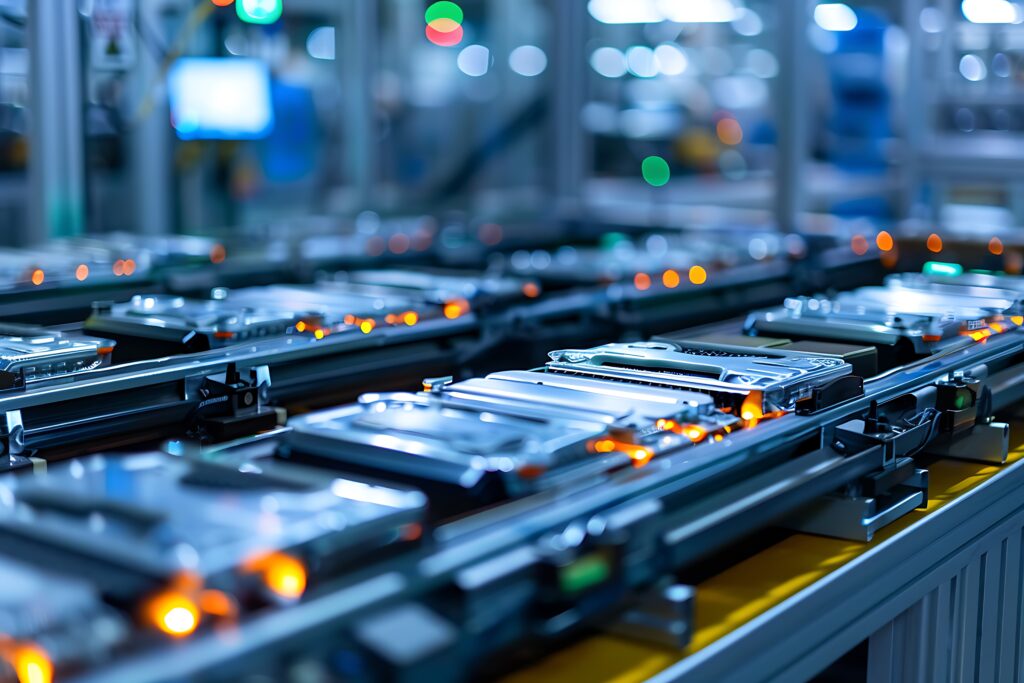
A battery manufacturer wanted to increase productivity and total product throughput on a 24-hour cycle using robot technology and other automated peripheral devices.
Retrofitted Solvent Coater

New College Institute wanted to train the local workforce in Martinsville, VA. The local economy was primarily textile and furniture manufacturing related, with limited technical positions. Two local film manufacturers, Commonwealth and CP Films, were struggling to have enough qualified resources for their facilities. New College Institute approached Ralph Schultz of Commonwealth to tackle the problem. They determined that a machine was needed to demonstrate the principles of coating and web conveyance (both essential processes in film making), in addition to a classroom setting to teach the principles. Other companies offered solutions that New College Institute couldn’t afford. Schultz then brought in Commonwealth’s longtime supplier, Re:Build Optimation. Re:Build Optimation’s team was able to offer a creative solution that met New College Institute’s budget constraints.
Production Expansion & Solvent Recovery

American Aerogel, a company developing and manufacturing proprietary aerogel insulation products, had been growing rapidly and needed to expand its production capabilities.
Because demand for its product was so high, American Aerogel’s 24/7 operation required new equipment with process improvements to increase production and improve efficiencies.
Because American Aerogel’s products are made with a proprietary one-of-a-kind aerogel called Aerocore, maintaining confidentiality of the products’ chemical makeup and patented manufacturing processes was/is of the utmost importance. Re:Build Optimation continues to honor this confidentiality.
Pilot Plant Expansion
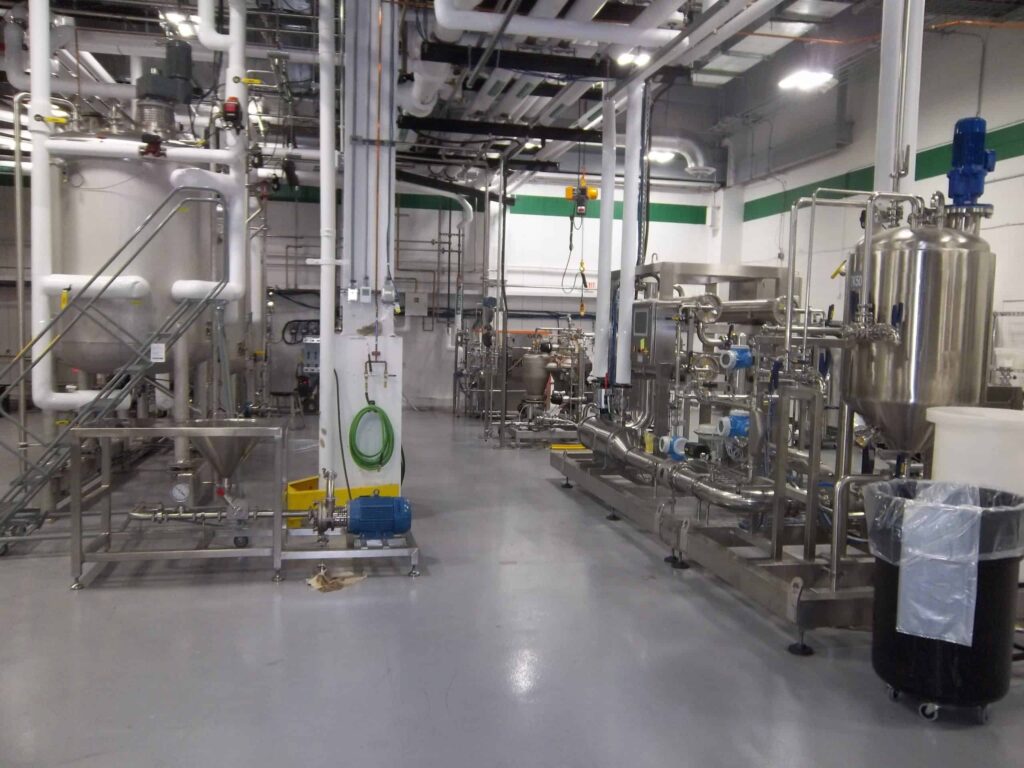
Greenlight’s Pilot Plant Expansion brought a previously installed fermenter and reactor capacity online with supporting downstream processing capabilities, product formulation, and a product packaging line to support precommercial and commercial product volumes of our first-to-the-world RNA based solutions.
Peanut Butter Plant Expansion
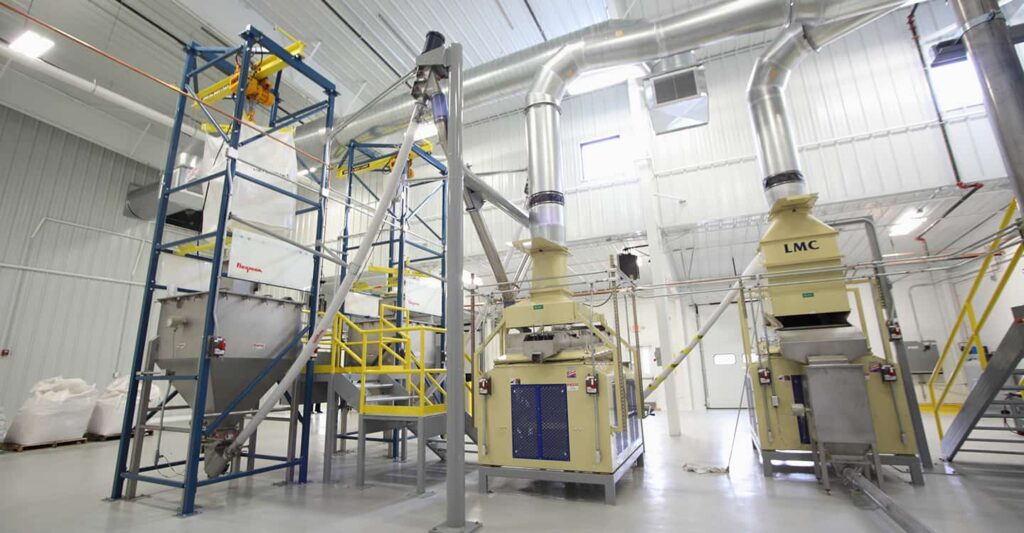
A metal parts manufacturing company required an automatic washing machine that would cut down on manual operation and improve its bottom line. Re:Build Optimation used its material handling and automation expertise to design a machine that would queue, load, unload and sort parts as one automated process. Re:Build Optimation then fabricated and assembled the 68-foot-long machine that met the company’s goal of a cost-effective and efficient washing procedure. The machine was solely produced by Re:Build Optimation from concept to completion, including the electrical, mechanical, material handling, process engineering, design, fabrication and assembly of each sub-system. The new washer has the room to queue up to five incoming kettles and index kettles into an automatic kettle unloader that will transfer the parts from the kettles into washer baskets. The operator delivering the kettle will make push button selections to indicate the product type tote bin and the wash cycle treatment. A washer in-feed conveyor will convey and transfer the loaded baskets into the washer system conveyor, which will take the parts through its cycle. An out-feed conveyor will receive the washed part baskets as they exit the washer and transfer the basket into a basket shuttle dumper, which will then dump the parts from the basket into the desired tote bin. The empty basket then goes back to a return conveyor for queue-up, and the process starts again.
Machine Design/Build – Parts Washer

A metal parts manufacturing company required an automatic washing machine that would cut down on manual operation and improve its bottom line. Re:Build Optimation used its material handling and automation expertise to design a machine that would queue, load, unload and sort parts as one automated process. Re:Build Optimation then fabricated and assembled the 68-foot-long machine that met the company’s goal of a cost-effective and efficient washing procedure. The machine was solely produced by Re:Build Optimation from concept to completion, including the electrical, mechanical, material handling, process engineering, design, fabrication and assembly of each sub-system. The new washer has the room to queue up to five incoming kettles and index kettles into an automatic kettle unloader that will transfer the parts from the kettles into washer baskets. The operator delivering the kettle will make push button selections to indicate the product type tote bin and the wash cycle treatment. A washer in-feed conveyor will convey and transfer the loaded baskets into the washer system conveyor, which will take the parts through its cycle. An out-feed conveyor will receive the washed part baskets as they exit the washer and transfer the basket into a basket shuttle dumper, which will then dump the parts from the basket into the desired tote bin. The empty basket then goes back to a return conveyor for queue-up, and the process starts again.
New Milk Replacer Production Facility

Grober Nutrition is in the dairy industry for animal food products in facilities built to human food standards, which is unique to the Northeast. Grober’s product is a powdered formula that is used as a milk replacer for young animals. Surplus Whey from a Skim Milk manufacturer is readily available as a supply component for the formula. The process included evaporating whey to a specific concentration, which was then used as an ingredient in producing a slurry which then fed a large dryer. The company needed a turnkey supplier for support of their new 60,000-sq-ft, state-of-the-art facility in Auburn, NY to produce the formula.
Manufacturing Vaccine Delivery Systems
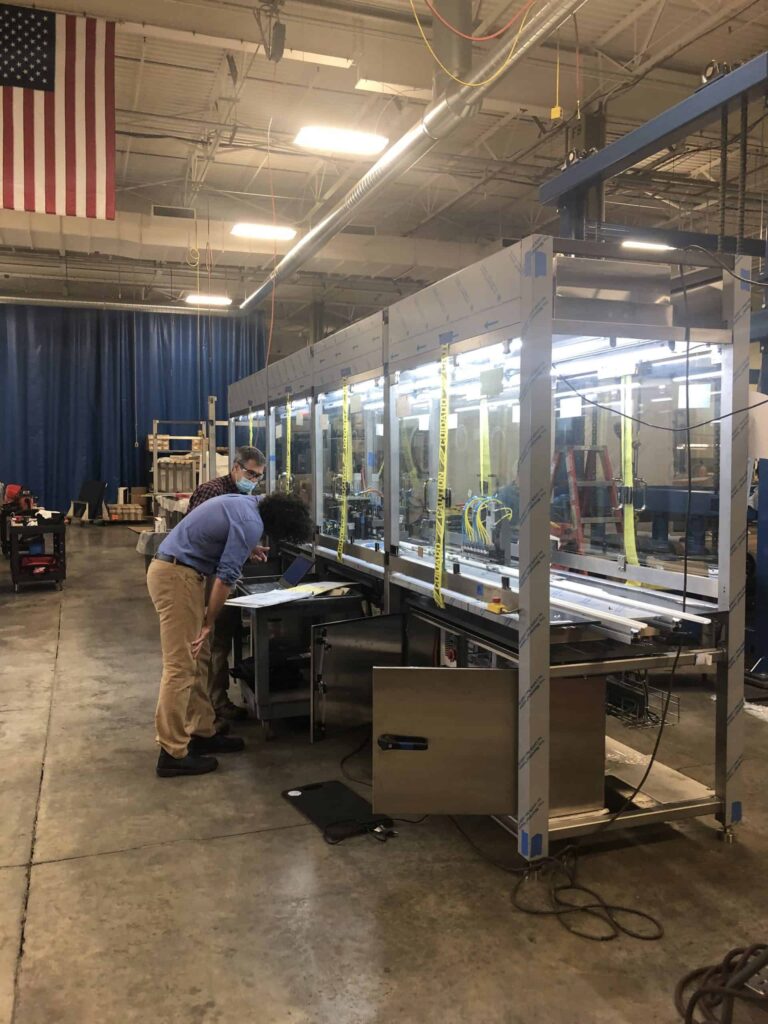
In early 2020, as part of Project Warp Speed, The Department of Defense funded several pharmaceutical companies to develop a vaccine for COVID-19. This was well publicized. On a parallel path, but not as well publicized, was a program to manufacture vaccine delivery systems. One of two companies funded by the Department of Defense, to make the vials for COVID was located in Auburn, AL. That summer they launched a $163 million expansion project to ramp up production of its proprietary vial system. The company needed to have special machines built, each 130 feet long and armed with sensitive cameras to detect defects or contaminants, to mass produce the vials. The facility was to have 10 production lines, each capable of turning out 15 million vials and syringes per year. Their patented materials science was a combination of a plastic container with a microscopic, thin, undetectable to the naked eye, pure glass coating for biological drugs and vaccines. The syringes were precision molded and up to 15 times more dimensionally consistent than glass, enabling error-free operation with autoinjectors and other drug delivery devices.