

5 Ways to Celebrate National Manufacturing Day
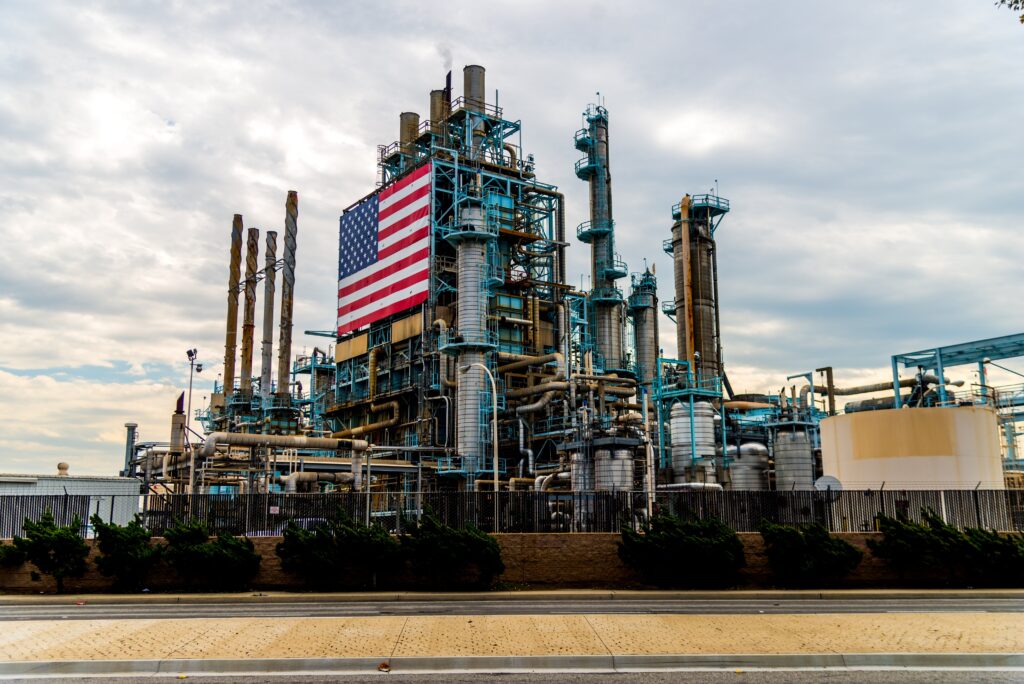
The first Friday of October every year has been designated as National Manufacturing Day. That day is set aside to proudly celebrate goods and services made in America. This year, more than ever, we are proud to celebrate American innovation. American manufacturers have led the world in technical development for the past two centuries and have enabled us to unlock new technologies that grow our economy.
The Impact of Rising Interest Rates on US Manufacturing

In February, 2009 the US economy hit a new low and in an effort to spur it along the Fed dropped the prime interest rates to a historic low of 3.25 percent. It stayed there for seven years and is just beginning to rise again, but slowly. Money has been cheap and abundant. In spite of this there has not been enough demand from the manufacturing sector to use all the available cash as investment capital to build new manufacturing infrastructure. Suddenly, in the spring of 2017 we have a new interest in increasing US manufacturing capacity and building new manufacturing plants. The initial investment will be made by large multinational well financed companies. Many of them have available cash reserves and are only looking for good ways to invest it. But the growth of these firms has a multifaceted ripple effect. Smaller firms, which are suppliers to these mega-firms, will get to grow with the economy as well. A rising tide raises all boats. Perhaps the question to ask is how rising interest rates will impact medium and small business as well as individual consumers.
Manufacturing Trends in 2024 – It’s All About Reshoring

Nearly twenty years ago Thomas Freidman published his book The World is Flat. It was the Financial Times Business Book of the Year in 2005 and sold millions of copies. It is because of the gospel of global trade. In the book, Friedman laid out the basis of offshoring, outsourcing, and supply-chaining. Business owners read the book and accepted that the future was a global economy with both essential parts and essential products manufactured in all parts of the world, most dominantly in China. Offshoring became the vogue and thousands of U.S. companies joined the siren song, closed U.S. plants, destroyed jobs, and nearly decimated the U.S. manufacturing base. That was then, but times have changed. Terms like onshoring, reshoring, nearshoring, new-shoring, and friend-shoring are now more in vogue. This change began to happen on a small scale, about a decade ago. But the alarm lights came on brightly during, and just after, the COVID-19 pandemic crystallized the view of supply chain limitations and risks. As we look at trends in manufacturing for 2024, we no longer see trends toward offshoring. We see quite the opposite. Five years ago, predictions for manufacturing trends during 2020 continue to include globalism with the acceleration of Industry 4.0 technologies to make things faster, smarter, and of higher quality. Predictions anticipated the growth of analytics, robotics, and additive manufacturing but not reshoring. We couldn’t see, even then, that globalism would soon be dying. The flat world of Friedman would be disrupted even more quickly than the flat world of 1492 was disproved by Columbus.
Small Manufacturing Companies in the USA

The New York Times recently ran a story about how Small Factories Emerge as a Weapon in the Fight Against Poverty. Their story centered on urban manufacturing. I live in upstate New York where there are lots of small manufacturing companies scattered across rural communities. Small manufacturers who exist in inner city neighborhoods or small rural towns are a critical part of the employment opportunities for those living near them.
Is There an Engineering Shortage in the United States?

We often hear or read about a shortage or anticipated shortage of engineers in the United States. To address this, programs are developed in elementary and high schools to encourage students to develop a love of math and become prepared for a careers in engineering or other applied sciences. Everyone knows that the United States is suffering from shortages in its science and engineering workforce, and that if continued, these shortages will cause us to fall behind countries who are economic competitors. Common knowledge is that these shortages are due mainly to weaknesses of the US educational system.
The Hazards of Contamination in Stainless Steel Fabrication
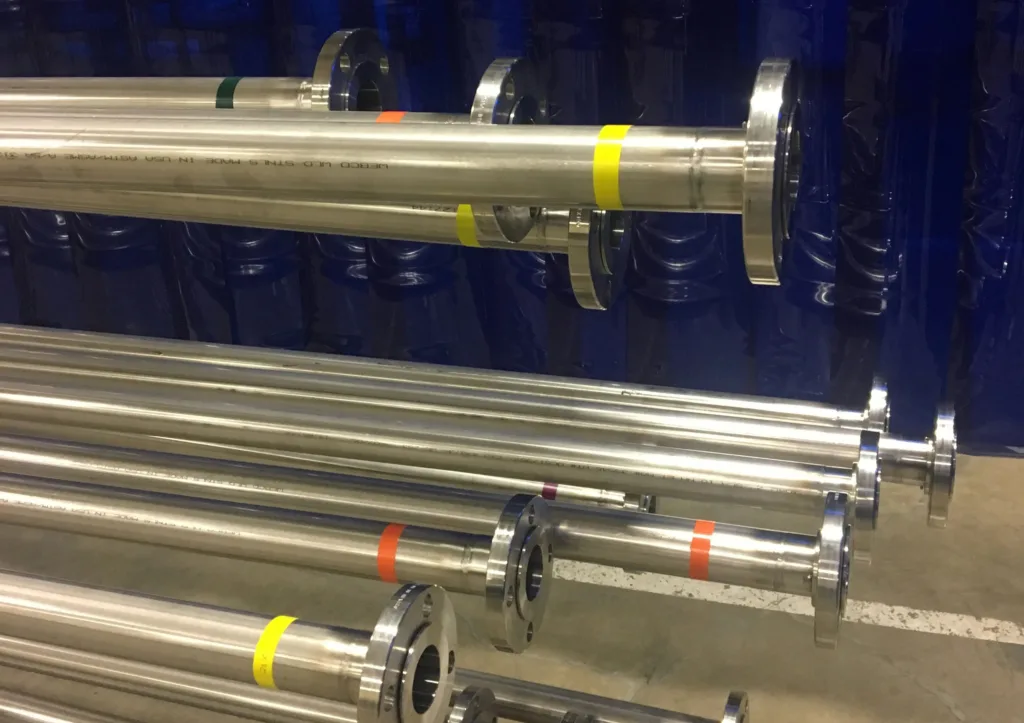
Stainless steel contamination can be a real problem in applications that require clean corrosion free surfaces. This is frequently a requirement in labs as well as food and pharmaceutical plants. Stainless steel, when fabricated correctly, provides excellent corrosion resistance. When misapplied, this will not be the case. Precautions must be taken to prevent contamination of stainless steel surfaces during fabrication. This is possible with the proper precautions, when done in a shop in controlled conditions, and more difficult when installation is carried out in a project field location.